
Magical plantlore for midsummer
Which you're welcome to try out for yourself...

Midsummer is a liminal time when the veil between the worlds is said to be thin. Which means it’s traditionally a time when you can divine your future (particularly marriage divination), and in folklore, midsummer is the time most fairy encounters happen.
Until relatively recently, Midsummer Eve was a time when people gathered at celebratory bonfires to mark the turn of the year - a tradition that’s far less common in the UK now, but is still a popular time for traditional outdoor festivities in Scandinavia and parts of central Europe and Russia.
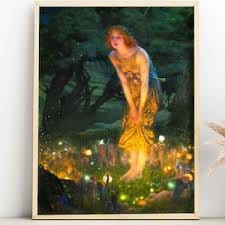
Anyway, if you’re interested in midsummer magic, here are a few of the more interesting traditions and superstitions you might want to try, that centre entirely on plants.
Moonwort
Moonwort is an inconspicuous little fern, common on heathlands and highland short grass areas, especially in Scotland and Northern England. It’s quite elusive, as it disappears soon after midsummer, and Midsummer’s Eve is the best time to look for it. Check online for possible sites near you.
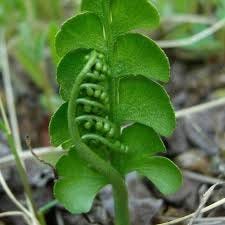
Moonwort was once believed to have the property of turning mercury to silver, and was used help women in childbirth. But strangely it was most commonly known as an aid for anyone trying to loosen iron nails, making them easier to pull out. This extended to a belief in moonwort’s special ability to open any lock when thrust into a keyhole (I haven’t tried this, but can’t help doubting it would work. Maybe, like many things, you need to really believe it will work to make it happen...)
The plant’s ability to loosen nails extended to horses’ shoes - Culpepper’s Herbal (1652) tells us another name for moonwort is Unshoo the Horse because of this property. Culpepper includes the story of the Earl of Essex’s thirty horses, who all lost their shoes when gathered on White Down, near Tiverton (so obviously a good place to find moonwort if you live in that area!)
Woodpeckers were also believed to understand the properties of moonwort, using it to remove any nail in the way of their nests. It was also believed that woodpeckers rubbed their beaks against moonwort on Midsummer’s Eve to make them sharp enough to pierce iron spikes.
Mugwort
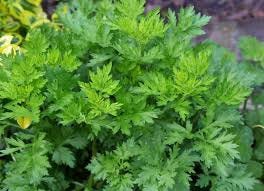
Medieval travellers loved mugwort, believing it helped them fend off weariness. Or when they did get tired after a day’s walking, an eggcup full of mugwort juice revived them. The leaves, beaten into lard, also make an excellent ointment for tired feet - a treatment known as far back as Pliny, writing in the first century AD. Among it’s many other attributes, Pliny believed mugwort could protect the wearer from witchcraft, wild beasts, poisonous medicines, and sunstroke.
But for special midsummer mugwort magic, this is from Thomas Lupton’s A thousand notable things, on various subjects. Disclosed from the secrets of nature and art, practicable, profitable, and of great advantage, 1776. He records that anyone digging under the mugwort root on Midsummer’s Eve will find a special ‘coal’, which has the properties of protecting the owner (so long as you have it on your person) ‘from plague, carbuncles, lightning, the quartan ague and from burning.” `(Quartan ague is a form of malaria.)
According to Lupton, this miraculous coal can only be found at one hour on Midsummer’s Eve - either noon or midnight. However herbalist Paul Barbette (1675), who also understood the healing properties of mugwort, considered the special ‘coal’ people sought was actually an old acid root, which could be found at any time. But I prefer the idea of the special ‘coal’, dug up at noon or midnight on Midsummer’s Eve....
Bracken
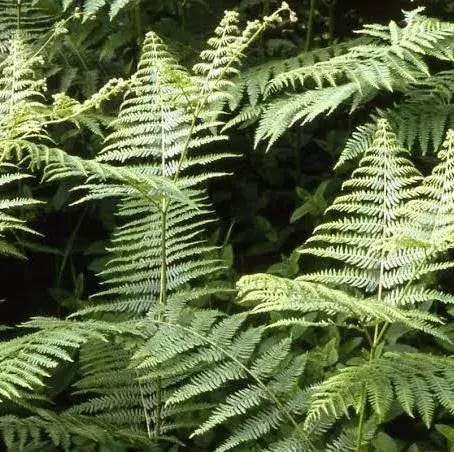
Fern seeds, or rather spores, have long been held in folklore as able to grant the collector the power of invisibility, if worn in a shoe. Not only that, they can grant you power over all living things. In fact, if you hold three seeds in your hand, they enable you to detect gold and treasure hidden under the earth.
So there must be a catch, right?
Right. For a start, according to Brand’s Observations on the popular antiquities of Great Britain 1793, this only works if you gather the seeds between the hours of eleven and midnight on Midsummer’s Eve. You also need to go alone, in total silence and take a pewter dish or a white cloth to put under the fern. You can’t shake the fern to make the seeds fall or they won’t work - they have to fall naturally. (Although according to a different tradition, you can bend the fern gently with a forked hazel rod. You still might not get any seeds,)
However, the spirits abroad on Midsummer Eve will work to prevent you collecting the magical seeds - mostly by scaring the crap out of you. And if you survive their shenanigans, when you get home you might find your collection has vanished anyway. Which all goes to show that achieving invisibility can be risky. (Though I’ve found, like Miss Marple, that being an older woman has the power to make you invisible anyway, so there are some advantages to age...)
Male Fern
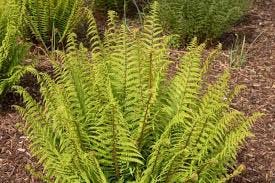
Also known as Lucky Hands, male fern is a magical plant traditionally thought to have protective, healing, and love inducing properties, which can be used in charms and cures.
An popular amulet once commonly made from the male fern is known as a lucky hand. To make this amulet, you need to dig up the male fern on Midsummer’s Eve, cut away all but five unfurled fronds, so you create something that resembles a gnarled hand with hooked fingers. You then have to smoke the ‘hand’ carefully to harden it in a Midsummer Eve bonfire. The amulet will last a long time and should protect you and your household from every form of bad luck, including the usual demons, witchcraft etc, as long as it lasts.
If you can’t manage a bonfire, you can always have a Midsummer Eve barbeque. Not sure if it works for making a lucky hand, but I might give it a go...
Lastly
If anyone reading this wants to try out any of the traditional plant magic this midsummer, please let me know how it goes. I’m very curious, but also quite lazy when it comes to anything that involves me stumbling out in the dark on my own :)
(NB if you follow me on Patreon, apologies for any repetition here - I’m in the process of trying to work out which site attracts more interest!)