
Tansy and its uses
Tanacetum vulgare

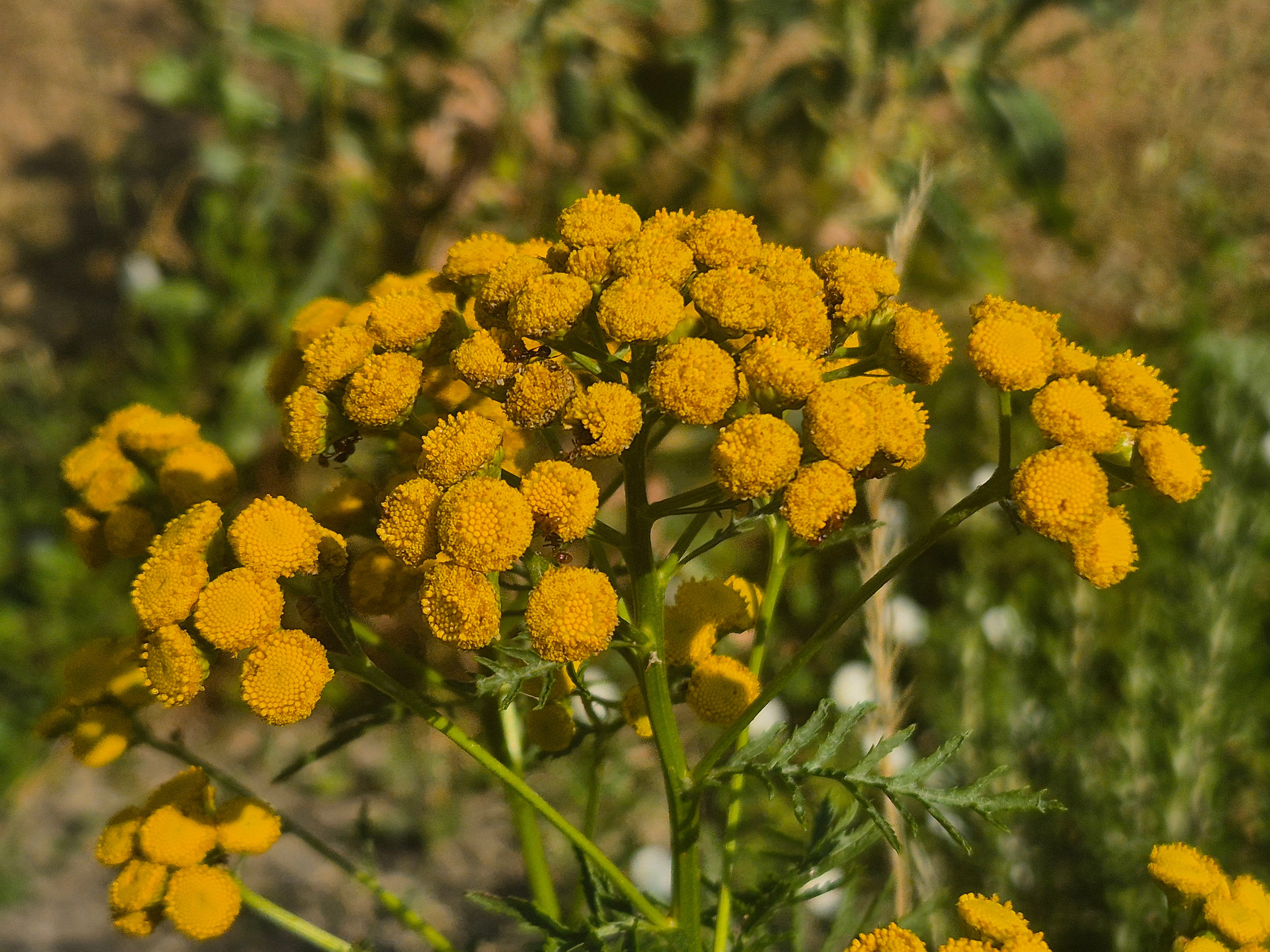
Flowering in July and August, the word tansy probably comes from the Greek athanatoia, or thansa, meaning immortality. It was once used at burials, helping to preserve the dead. From medieval times, people scattered it on the floors of their homes to help sweeten the air and repel insects, including clothes moths. In the plague years it was used to cover the floors of public buildings and churches, in the hope that it helped prevent the spread of the disease.
Tansy was also valued as a culinary herb. Although bitter, it made a good substitute for more expensive and exotic spices such as cinnamon and nutmeg. It’s also an excellent plant dye, turning cloth a rich, golden yellow.
As a remedy, tansy was used to staunch wounds and to make a poultice for skin blemishes. In Sussex, wearing tansy leaves in your shoes was considered a charm against ague and high fevers (ague is an old word for fever, generally meaning malaria).
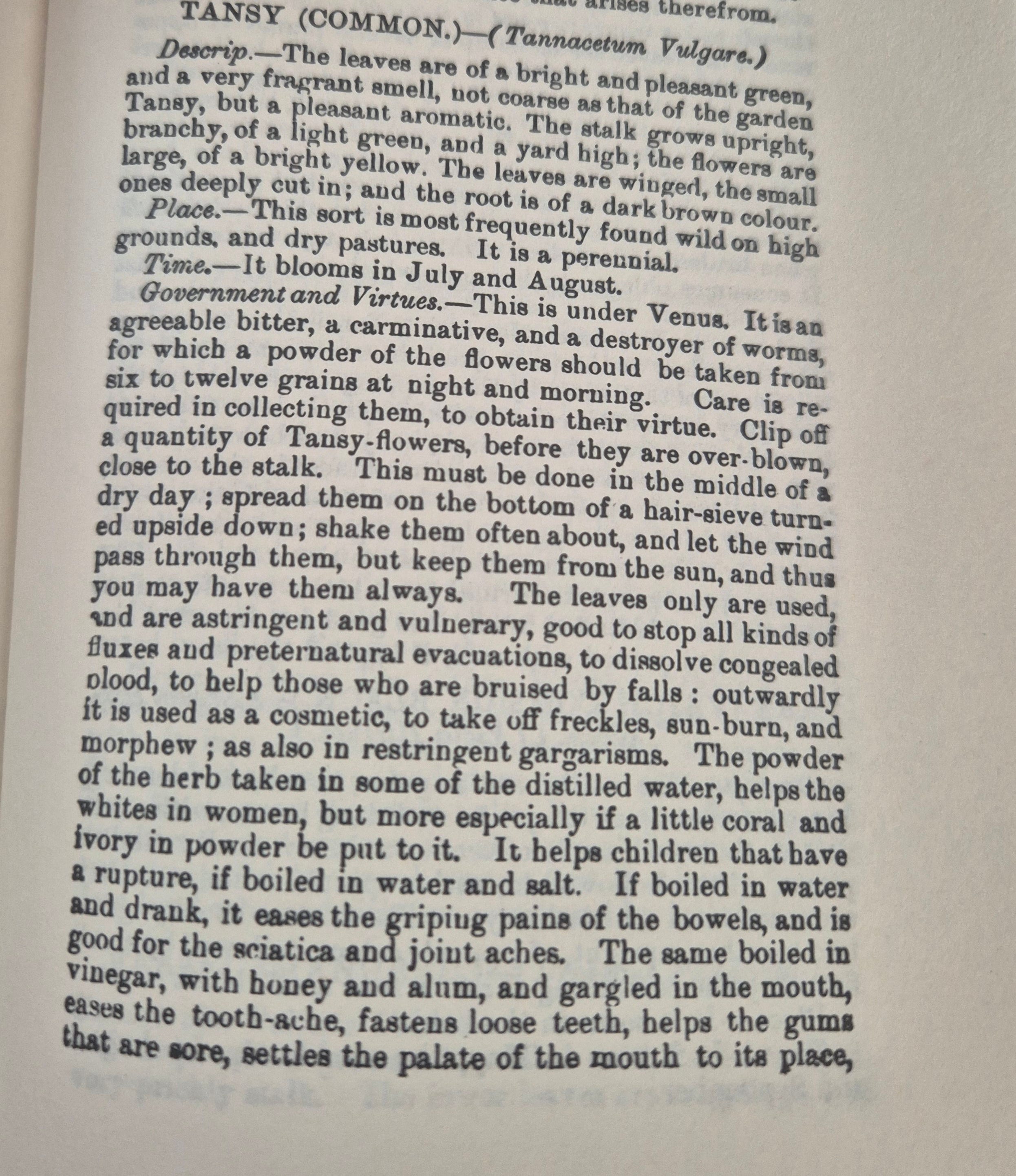
Here’s what Culpepper has to say about the herb and its uses:
Roy Vickery’s Folk Flora lists all the local names he researched for tansy, which include Buttons, Goosegrass, Green Ginger, Stinking Willie and Traveller’s Rest - the last name referring to the herb’s properties for healing blisters on feet.
Vickery records accounts of people using tansy as a floor covering within living memory, and found it is still commonly used as a cure for thread worms. (If you’re interested, or have threadworms, you need to boil the flowers or leaves of tansy and drink a wineglass full of the infusion each morning and evening until the problem is fixed.)
NB. You can also simply visit your your local pharmacy for an alternative, very effective remedy for threadworms. In fact maybe do that anyway :)